JillLebofsky may earn a commission if you buy through links on this page, at no extra cost to you. That does not change what we report.
Part of our Gluco Care overview. Last checked November 17, 2026.
The plain answer to "does GlucoCare work" is that nobody knows, because no trial has tested the finished capsule. What exists are studies of single ingredients, usually at much larger amounts. The clearest example is white mulberry: one capsule holds about 0.25 mg of its active compound DNJ, while the trial that found an effect used 12 mg three times a day[1][4]. This guide covers the one-a-day capsule sold through glucocare.net, not GlucoCare insulin syringes, pen needles or DXN Gluco Care.
Does GlucoCare work? The short answer
Gluco Care has no published trial of its own, so any claim that it lowers blood sugar is borrowed from ingredient studies. Those studies are real, but they tested larger doses, other extracts and, often, people who already had type 2 diabetes.
Here is what can be said with the evidence we read on November 17, 2026:
- Mulberry, gymnema, banaba and chromium have human studies that found lower fasting glucose or HbA1c in some groups.
- Bitter melon, sold as a glucose herb, came out null in a 9-trial meta-analysis[6].
- Guggul, juniper and yarrow have no human glucose trials we could find.
- The label prints every dose, which is what makes this comparison possible[1].
What cannot be concluded: that one capsule moves your numbers, or that it "regenerates islet cells" as the sales page says[2]. For a wider look at the category, see our blood sugar support guide.
Which evidence levels should you not confuse?
Four kinds of evidence get blended together in supplement marketing, and only the last two say anything about a product you swallow. Gluco Care has the first two and none of the last two.
1. Plausibility
A lab or animal result that suggests a way an ingredient could act. Juniper's glucose effect comes only from diabetic rats[11]. The islet cell story sits at this level, if it reaches any level at all.
2. Ingredient trials
Human studies of one ingredient at a set dose. Gymnema has 10 studies with 419 people with type 2 diabetes, but the pooled results compared people with their own baseline, not with a placebo group[5].
3. Finished-product trial
A test of the exact capsule, at the label dose, against a placebo. None exists for Gluco Care. The sales page lists references but does not tie them to its own doses[2].
4. Replication
A second independent trial that finds the same result. Without a first trial, there is nothing to repeat.
Gluco Care claims vs what the evidence supports
The sales page makes three types of promise: islet cell repair, weight loss and wider benefits for heart, brain and joints[2]. The table sets each one against the research we read.
| Vendor claim | Reasonable reading | Limitation |
|---|---|---|
| "Regenerate islet cell function" | Unsupported | No human study of the product or its doses measures islet cells |
| Supports healthy blood sugar | Plausible for some ingredients | Effects seen at 3 to 144 times the label amounts |
| "Healthy weight loss" | Not shown | Cochrane found no reliable evidence for chromium and weight[8]; bitter melon weight trials were null[6] |
| Heart, brain and joint benefits | Not tested | No trial of the formula for any of these |
| "143,379" users helped | Unverifiable | No data or study behind the count |
The page also implies buyers may not need to rely on medication alone. Do not stop or cut any diabetes medicine because of a supplement. If you still want to try it, the 180-day refund window gives you time to judge it (checked November 17, 2026).
Which ingredients matter most?
Four ingredients carry most of the human glucose evidence, and each sits well below its study dose in Gluco Care. That gap is the main reason the formula is unproven even though the label is honest.
| Ingredient | Gluco Care | Amount in studies |
|---|---|---|
| White mulberry (1% DNJ) | 25 mg, about 0.25 mg DNJ | 12 mg DNJ three times daily[4] |
| Gymnema leaf | 50 mg | 200 to 1,000 mg a day[5] |
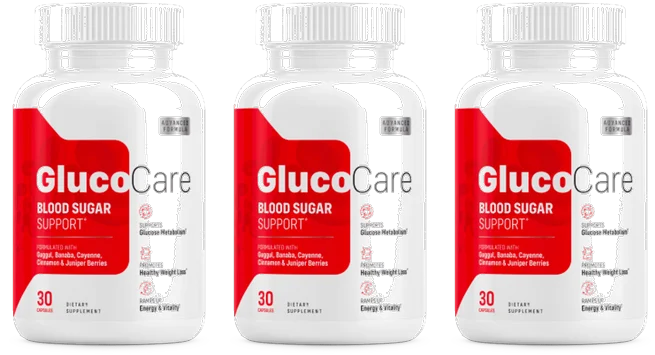
| Banaba (1% corosolic acid) | 25 mg, about 0.25 mg corosolic acid | 10 mg corosolic acid[9]; 1,000 mg banaba a day[10] |
| Chromium | 67 mcg | 200 to 1,000 mcg a day[7] |
Population matters too. The mulberry meta-analysis of 12 trials found bigger drops in people with raised baseline glucose and in trials of 8 weeks or longer[3]. Cinnamon's body-fat effect appeared only at 2 g or more a day for 12 weeks[12], and Gluco Care has 50 mg of a 4:1 extract. Our full Gluco Care ingredient breakdown covers all 20 items.
What results are realistic to expect?
If the formula does anything, expect small shifts measured over weeks, not days. The trials behind its strongest ingredients ran 8 to 12 weeks and reported modest changes.
- Mulberry: fasting glucose down 0.47 mmol/L across 12 trials[3]; in one 12-week trial, fasting glucose fell 3.86 mg/dL and HbA1c 0.11%[4].
- Banaba: lower fasting glucose after 12 weeks at 1,000 mg a day[10].
Those numbers came from doses Gluco Care does not reach. A realistic expectation is no measurable change; a good result would be a small one. Track it with your doctor's tests, as our Gluco Care dosing guide explains.
When should you see a doctor instead?
A supplement is the wrong first step if your blood sugar is high or falling out of control. See a doctor first if you have not had a diagnosis, if your readings are rising on your current medicine, or if you take insulin or a sulfonylurea, since several Gluco Care herbs can add to their effect[13].
See a doctor right away if you have:
- Shaking, sweating, confusion or a racing heart, which can signal low blood sugar
- Strong thirst, frequent urination or blurred vision with high readings
- Nausea, vomiting or stomach pain with high readings
- Fainting or trouble staying awake
Our Gluco Care side effects guide lists the medicines to raise with a pharmacist.
Evidence conclusion
Gluco Care is a fully labeled formula built from ingredients with mixed, mostly small-dose evidence. It has no trial of its own.
| Decision question | Our assessment, November 17, 2026 |
|---|---|
| Is there a trial of Gluco Care? | No |
| Do some ingredients have human glucose data? | Yes: mulberry, gymnema, banaba, chromium |
| Are the label doses close to study doses? | No, mostly far lower |
| Is the islet cell claim supported? | No |
| Safe to use with diabetes medicine? | Only after a doctor or pharmacist agrees |
If you buy, use the refund window and check prices on our Gluco Care price page. Our methods are on the how we check products page.
Back to the Gluco Care overview.
Frequently asked questions
What is Gluco Care used for?
Gluco Care is a one-capsule-a-day supplement sold for blood sugar support through glucocare.net and BuyGoods. It is a different product from GlucoCare insulin syringes, pen needles or DXN Gluco Care, which share the name but not the maker.
How long does Gluco Care take to work?
No timeline exists for Gluco Care because it has not been tested. Ingredient trials that found glucose changes ran 8 to 12 weeks, so judge any effect with lab results over about three months, within the 180-day refund window.
Can Gluco Care replace metformin or insulin?
No. Gluco Care is a dietary supplement with no trial behind it, and diabetes medicines have strong evidence. Do not stop or lower any prescribed medicine on your own; ask your doctor before adding Gluco Care.
Is there a clinical study on Gluco Care?
We found no published study of the Gluco Care capsule as of November 17, 2026. The sales page cites ingredient papers, such as a gymnema analysis, but none of them tested the product or its label doses.
Does Gluco Care help with weight loss?
There is no evidence it does. The bottle says healthy weight loss, but a Cochrane analysis found no reliable evidence that chromium helps weight, and bitter melon trials showed no weight change versus placebo.
Sources
- Gluco Care Supplement Facts label. glucocare.net (vendor), read November 17, 2026.
- Gluco Care sales page. glucocare.net (vendor), read November 17, 2026.
- Meta-analysis of mulberry leaf and glycemic control (PMID 36644880). PubMed, read October 27, 2026.
- 12-week randomized trial of mulberry leaf extract in borderline diabetes (PMID 32147046). PubMed, read October 27, 2026.
- Gymnema sylvestre supplementation and glycemic control in type 2 diabetes, meta-analysis (PMID 34467577). Phytotherapy Research via PubMed, read November 17, 2026.
- Meta-analysis of bitter melon and metabolic outcomes (PMID 38274207). PubMed, read October 2, 2026.
- Chromium: Fact Sheet for Health Professionals (archived copy). NIH Office of Dietary Supplements, read October 19, 2026.
- Cochrane analysis of chromium picolinate for overweight or obesity (PMID 24293292). PubMed, read October 19, 2026.
- Single-dose crossover study of corosolic acid and post-load glucose (PMID 16549220). PubMed, read October 20, 2026.
- Randomized trial of banaba in metabolic syndrome (PMID 34726501). PubMed, read October 20, 2026.
- Pharmacology of Juniperus communis (PMID 31508527). PubMed, read October 27, 2026.
- Dose-response meta-analysis of cinnamon and body composition (PMID 30799194). PubMed, read October 2, 2026.
- Bitter Melon. Memorial Sloan Kettering Cancer Center, read October 2, 2026.
This page is general information, not medical advice. Dietary supplements are not reviewed by the FDA for safety or effectiveness before they are sold and are not intended to diagnose, treat, cure or prevent any disease. Talk to your doctor before taking any supplement, especially if you are pregnant, nursing, take medication or have a health condition.